30周年回顾 第三章 英雄崛起
Chapter Three
"Rise of a Hero"
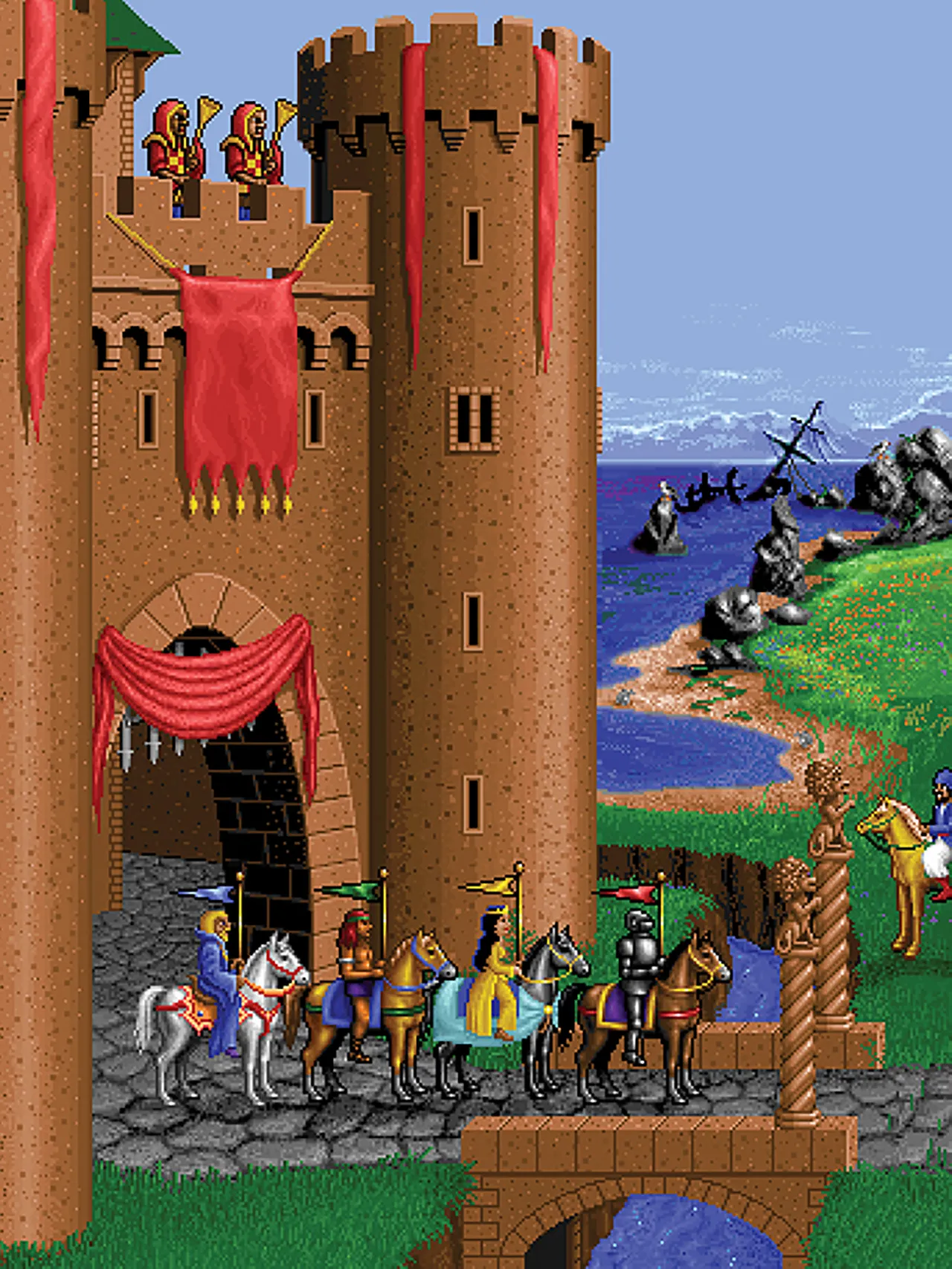
On an early morning Zoom call from Vietnam, Paul Rattner seemed relaxed in his home office. After the pleasantries—but before we dove into our discussion about Heroes—we first harassed one another about the gray hair and wrinkles that we'd both acquired over the past twenty years. As the expression goes, it'd been a minute. We'd last seen each other while we were working alongside several Heroes vets at Rapid Eye Entertainment, a San Diego-based company founded by Mark Caldwell. Before that, Paul and I had gotten to know one another at New World Computing where we'd both been given our start as game designers around the same time thanks to the success of the Might & Magic franchise.
在清晨来自越南的一通 Zoom 视频通话中,保罗·拉特纳似乎在家庭办公室里显得很放松。在寒暄过后,我们先是互相调侃了对方过去二十年来长出的白发和皱纹,再开始讨论起《英雄无敌》这款游戏。正如那句俗语所说,弹指一挥间。我们上一次见到彼此还是在拉普雷伊娱乐公司(《无尽的任务战略版》的实际开发者)一起工作的时候,那家公司位于圣地亚哥,正是马克·考德威尔创立的。在此之前,保罗和我就是在 NWC 公司相识的,当时我们差不多在同一时间因为《魔法门》系列的成功而被招募为游戏设计师。
"Did I ever tell you how I got my job?" Rattner asked. He had a mischievous twinkle in his eyes that I knew well. "I had a computer, and I bought a copy of Nuclear War. It was a lot of fun, and I turned the manual over, and I saw the address was on Ventura Boulevard, just down the street from where I lived." The Ventura Boulevard location in Woodland Hills was the second office for New World Computing and had been a significant upgrade over the sketchy Van Nuys warehouse they'd occupied only a few months before. "I went over there and was like, ‘Give me a job!' I was told ‘No, no, no, we're not hiring,' but I went back every week. ‘Give me a job, give me a job, give me a job,' until they finally gave in and hired me." He'd worn them down attrition style. Perfect for a future designer on Heroes.
“我有没有跟你说过我是如何得到这份工作的?”拉特纳问道。他的眼中闪烁着狡黠的光芒,这种眼神我再熟悉不过了。“当时我买了一台电脑,还买了一份《核战狂人梦》。那游戏非常有趣,我翻阅了游戏手册,发现公司地址就在文图拉大道上,就在我住的地方附近。”位于伍德兰希尔斯的文图拉大道是 NWC 公司的第二个办公地点,与他们几个月前租用的那个简陋的范努斯仓库相比,这是一次重大的升级。“我去了那里,说‘给我一份工作吧!’他们回答说:‘不行,不行,我们不招人。’但我每周都会去。‘给我一份工作,给我一份工作,给我一份工作’,直到他们最终答应并雇用了我。”他以逐渐消磨对方意志的方式让他们屈服,这对于《英雄无敌》未来的设计师来说简直是再合适不过了。
The game that had attracted Rattner, Nuclear War, had begun life as a successful strategic card game created by Douglas Malewicki. While King's Bounty had been in development, the computer gaming rights for Nuclear War and a role-playing D&D competitor known as Tunnels & Trolls were licensed by New World Computing's CFO Ronald Spitzer. Along with the outright acquisition of the intellectual properties owned by Task Force Games, this period in New World's history would be marked by major expansion, with new ideas, new talent, and even whole development teams being gobbled up into the company's already impressive portfolio.
吸引拉特纳参与的那款游戏——《核战狂人梦》,最初是由道格拉斯·马莱维基创作的一款成功的卡牌策略游戏。而在开发《国王的赏金》的过程中,《核战狂人梦》这款卡牌以及一款名为《隧道与巨魔》的桌面角色扮演游戏(《龙与地下城》的竞品)的电脑游戏版权,均由 NWC 公司的首席财务官罗纳德·斯皮策获得。与此同时, NWC 公司还收购了特遣队游戏公司所拥有的知识产权。在 NWC 公司的历史中,这一时期将以重大扩张为标志,新的理念、新的人才、甚至整个开发团队都被纳入了该公司已经颇具规模的资产组合之中。
从桌面到台面 - From Desktop To Tabletop
In 1991, a year after the release of King's Bounty, New World Computing subsidiary Task Force Games would release a tabletop version of the game designed by Robert L. Sassone, Jamie Sassone, and John Olsen. Though the electronic and analog games shared cover art and a few gameplay details, Jon Van Caneghem has asserted that development of the two projects was otherwise kept separate, with the board game existing as its own property that was distinct from the New World computer game.
1991年,在《国王的赏赐》发行一年后, NWC 公司的子公司“特遣队游戏”发布了这款游戏由罗伯特·L·萨索内、杰米·萨索内和约翰·奥尔森设计的桌游版。尽管电子游戏和实体游戏的封面设计和不少玩法细节都相同,但乔·万·坎内根却表示,这两个项目的开发是相互独立的,桌面游戏作为一个独立的产物存在,与 NWC 的电脑游戏是不同的。
Nicholas Beliaeff, who was the lore master on the computer version, echoed Caneghem's sentiments. "If you look at those board game rules versus what happened on the computer... there're some similarities, but they're pretty different games. You're not gonna have a one-to-one. I think the computer game was a lot more fun at the end of the day."
尼古拉斯·贝利亚夫是电脑版游戏的规则制定者,他表达了坎内根的观点:“如果你将那些纸牌游戏的规则与电脑版的游戏情况进行比较……它们有一些相似之处,但却是完全不同的游戏。两者不会完全对应。我认为最终来看,电脑版的游戏要有趣得多。”
Artist Kenneth Mayfield, whose services had been picked up along with the rights to Starfleet Battles, would assist with the port of King's Bounty to the popular Commodore Amiga, and would create all the art for Bounty's manual as well. After relocating to California from Oklahoma, he would convince me to fill the shoes of loremaster Nicholas Beliaeff who had recently left New World. I would start by creating marketing materials for Bounty, graduate up to rewriting awkwardly translated text for the port of Tunnels & Trolls into English, and then at last be given the job of simultaneously handling the narratives for both the Might & Magic series and a still-incubating RPG concept. It was a lot to take on for a newly minted designer. After a few months, I decided that both projects would be better served if I focused on one and let someone take over the other. It was a tough choice. Might & Magic was unquestionably the more prestigious of the two projects, but it also was less of a challenge. It was an established universe with two games' worth of lore, and I was anxious to do my own thing. After sketching in the big narrative framework for Might & Magic III and establishing the idea of the isles and the submerged ship, I handed the reins over to another fellow Okie, Ron Bolinger, who very capably shepherded the Might & Magic narrative from Isles of Terra through the World of Xeen duology. In the meantime, I teamed up with Mayfield and Nuclear War's programming lead Eric Hyman to create Planet's Edge, a combination sci-fi RPG and space combat simulator that, under the hood, was running the Starfleet Battles ruleset without explicitly referencing the lore of Star Trek.
画师肯尼斯·梅菲尔德(其服务随同《星舰战争》的版权被一同收购)协助将《国王的赏金》移植到广受欢迎的康懋达阿米加电脑平台上,并为《国王的赏金》游戏手册创作全部插图。我从俄克拉荷马州迁至加利福尼亚后,是他说服我接替最近离开 NWC 公司的“传闻大师”尼古拉斯·贝利亚夫的职位。我将首先为《国王的赏金》制作营销材料,然后重新编写《隧道与巨魔》的英文版(该作品的翻译存在诸多问题),最后还承担了同时处理《魔法门》系列作和一个仍在孵化中的角色扮演游戏之叙事的工作。对于一名新晋设计师来说,这是一项艰巨的任务。几个月后,我决定还是专注于一个项目,把另一个交给别人,这两个项目才会更好。那是一次艰难的选择,《魔法门》无疑是在这两个项目中更具声望的一部,但它也相对不那么具有挑战性。这是一个已有的宇宙,拥有相当于两部游戏的背景故事,而我渴望做自己的事情。在为《魔法门3》勾勒出宏大的叙事框架,并确立了岛屿和沉没船只的概念之后,我将权限交给了另一位俄克拉荷马人罗恩·博林格,他非常出色地引领《魔法门》的叙事从幻岛向席恩世界两部曲的过渡。与此同时,我与梅菲尔德、以及《核战狂人梦》的编程负责人埃里克·海曼合作,创作了《星球边缘》,这是一款结合了科幻角色扮演游戏和太空战斗模拟器的游戏,其内部运行的是《星舰战争》的规则集,但并未明确引用《星际迷航》的背景故事。
Beyond adapting existing game properties like Nuclear War, New World was looking to serve as a publisher for titles that had already been developed but needed help getting to market. Scott McDaniel, an old friend of Jon Van Caneghem who had grown up playing D&D with the Might & Magic creator, served as the marketing director at New World Computing and explains how things were changing in the mid-1990s. "Jon was always very insightful and forward looking. Starting with King's Bounty, he was looking for a big differentiator, and he didn't want everything to just be Might & Magic. So he sent Mark Caldwell out to start looking at all these little two-guy teams who were making games of their own. That's how we got into the publication business."
除了对诸如《核战狂人梦》这类现有游戏进行改编外, NWC 公司还致力于为那些已经开发完成但需要帮助推向市场的游戏提供发行服务。斯科特·麦克丹尼尔是乔·万·坎内根的老朋友,从小就跟这位《魔法门》的创作者一起玩《龙与地下城》。他曾在 NWC 公司担任营销总监,并向我们讲述了20世纪90年代中期情况的变化:“乔总是很有洞察力且目光长远。从《国王的赏赐》开始,他就一直在寻找一个显著的差异化元素,他不想让所有游戏都只是《魔法门》系列。所以他派马克·考德威尔出去,去寻找那些独立制作游戏的两人团队。就这样,我们进入了发行行业。”
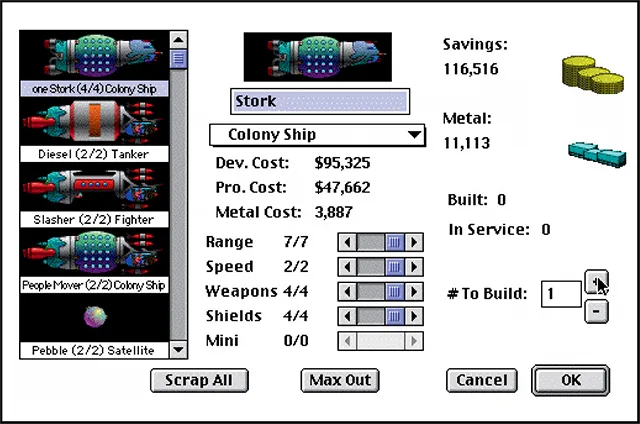
ABOVE: The Hero Screen from Heroes of Might & Magic, showing the status of Agar's core attributes, plus the artifacts and combatants that he's amassed.
上图:《太空征服》是一款由彼得·康姆斯为德尔塔·陶公司开发的银河征服类科幻游戏,于 1991 年首次在麦金塔电脑上发布。随后,保罗·托特于 1996 年将其移植到 Windows 平台,并于 1997 年由 NWC 公司发行。
One of the first games to cross their virtual transom was Iron Cross, a real-time World War II strategy game by independent developer Phil Steinmeyer. Like Caneghem, Steinmeyer's first effort was a "garage game" for which he'd done all of the programming as well as most of the sound and art. It was hailed for its time as a trailblazer, particularly for its often-unpredictable AI which could be unsettling to face off against. The game would also ship with an editor that allowed players to create their own scenarios. Both ideas were very much of interest to New World Computing, and would influence the King's Bounty sequel that had been quietly gestating for several years.
他们首批上线的游戏之一是《铁十字》,这是一款由独立开发者菲尔·斯坦梅耶开发的二战题材即时制策略游戏。和坎内根一样,斯坦梅耶的首部作品也是一种“车库游戏”。他不仅完成了所有的编程工作,还负责了大部分的音效和美术设计。该作品作为当时的先驱者受到了赞誉,尤其因为它常常难以预测、相当不易对付的AI敌人。这款游戏还将附带一个编辑器,玩家可以通过该编辑器自行创建游戏场景。这两个想法都深深吸引了 NWC 公司,也将对秘密酝酿了数年之久的《国王的赏赐》“精神续作”产生影响。
In the time since Bounty's release, fans had been clamoring for a follow-up, and the success of Sid Meier's Civilization in 1991 had proven beyond a shadow of a doubt that a strategy game could be critically and financially successful. Caneghem remained cautious, however, and rather than simply diving back in with a Civilization lookalike, he saw that the kinds of players who were buying games were subtly drifting in a direction that might be friendlier to what King's Bounty originally had to offer.
自《国王的赏金》发布以来,玩家们一直强烈要求推出续作。而 1991 年《席德·梅尔的文明》游戏的成功无疑证明了策略游戏也能够叫好又叫座。然而,坎内根却保持谨慎态度,他没有简单地推出一款类似《文明》的游戏,而是意识到购买游戏的玩家群体正在逐渐向一个可能更有利于《国王的赏金》最初所呈现内容的方向转变。
"When King's Bounty came out, it was mostly all of us who were nerds who had our computers and were hardcore tabletop gamers too," Caneghem said. "Reviews in Computer Gaming World and the number of stars that a game was given drove everything. It was all about escalation of difficulty, how enormously hard these games were, and how ridiculously long it took to play them. But in just a couple of years the audience started getting wider. A lot of the new games weren't scoring well in the review mags because the reviewers were all hardcore guys. They'd be going, 'Oh, these things are too easy, too casual,' just saying terrible things, but the new games were starting to sell really well despite them."
“当《国王的赏金》问世时,参与其中的大多是像我们这样痴迷电脑游戏、同时还是硬核桌游玩家的人。”坎内根说,“《电脑游戏世界》上的评论以及一款游戏所获得的星级评价决定了一切。一切都围绕着游戏难度的提升展开,这些游戏的难度之大令人难以置信,而且玩这些游戏所需的时间也极其漫长。但仅仅几年时间,受众群体就开始了扩展。很多新游戏在评测杂志上的评分都不高,因为那些评论者都是资深玩家。他们会说:‘哦,这些游戏太简单了,太休闲了。’诸如此类负面的话,但随他们怎么说,新游戏的销量却开始大幅上升。”
As Caneghem saw it, it was absolutely essential to reach out to these new players because they represented where things were going, a mainstream class of players who were looking for a somewhat more casual experience. "I just wanted to make games that appealed to as many people as possible. Let players tweak the difficulty however they want, and then let them play and enjoy. That's something I'd learned while building Might & Magic. If you just put in the hours as a player in that game, you'd eventually get through it. I wanted to build on that idea for Heroes and make it so people didn't have to absolutely min-max it to win."
坎内根看到,转向那些新玩家是至关重要的,因为他们代表着游戏发展的方向,是一群寻求较为休闲游戏体验的主流玩家。“我只是想制作出能吸引尽可能多玩家的游戏。让玩家按照自己的意愿调整游戏难度,然后让他们尽情游戏、享受其中的乐趣,这是我在开发《魔法门》时学到的经验。作为玩家,如果你在那个游戏中投入足够的时间,最终还是能够通关的。我想在《英雄无敌》的开发中延续这个理念,让玩家不必非要进行极端的优化才能获胜。”
苦苦等待英雄 - Holding Out for a Hero
In the lingo of game developers, role-playing games are "sticky." Players tend to become more emotionally invested and will typically spend more time when they are presented with an avatar that can be perceived as an extension of themselves. When their avatar gains promotion and is given the choice to determine how their skills are developed, the player feels as though the hero's achievements are their own and not just something that happened to a collection of random pixels. By having virtual skin in the game, the player tends to feel more engaged in a game's stakes.
在游戏开发者们的术语中,角色扮演游戏具有“黏性”。玩家往往会更加投入情感,并且通常会在拥有能被视为自身延伸的虚拟形象的情况下花费更多时间。当玩家的虚拟形象获得晋升,并且能够自主决定自身技能的发展方向时,玩家会觉得自己是英雄成就的创造者,而不是什么随机像素组合达成的结果。在游戏中拥有虚拟皮肤,也会让玩家更投入到游戏的胜负之中。
In the original King's Bounty, the four hero choices presented to the player functioned more like chess pieces than characters with which the player could identify. The Barbarian, Knight, Paladin, or Sorceress each had their own set of strategic strengths and weaknesses, but aside from their Leadership rating, none of them really advanced in any perceptible way throughout the course of the game. They remained essentially the same from start to finish.
在最初的《国王的赏金》游戏中,向玩家展示的四种英雄角色更像是棋盘上的棋子,而非能让玩家产生共鸣的角色。野蛮人、骑士、圣骑士和女术士各自拥有独特的战略优势和劣势,但除了领导力数值之外,他们在这整个游戏过程中并不会在任何方面取得明显的进步。从开始到结束,他们基本上都没有发生改变。
With the first Heroes of Might & Magic, Caneghem slowly began exposing RPG-like attributes to players so that they could at least track the growth of their avatars. The Heroes—who now officially carried that title—were endowed with four essential characteristics that they all shared: Defense, Attack, Spell Power, and Knowledge. As the player accumulated experience, their Hero would have chances to randomly accumulate new skill points in the four different characteristics as was dictated by their classes. For example, Warlocks and Sorceresses would have a better chance of gaining skill points for Knowledge or Spell Power rather than in the Defense or Attack categories. Unfortunately, the player had no influence over how these attributes grew, so while they could witness the ongoing changes, they were still essentially spectators to the development of their characters.
在推出《魔法门之英雄无敌》系列的第一部作品后,坎内根逐渐向玩家展示了类似角色扮演游戏的属性,以便玩家至少能够追踪角色的成长情况。这些早就被称为“英雄”的角色现在正式具备了四个共同的基本属性:防御、攻击、力量和知识。随着经验的获取,这些英雄将有机会随机获得这四个不同属性的新技能点,具体获得哪一属性的技能点取决于其所属的职业。例如,男巫和女巫更有可能获得知识或力量方面的技能点,而不是防御或攻击方面。不幸的是,玩家无法控制这些属性的增长方式,因此尽管他们能够目睹其变化过程,但本质上仍是角色发展的旁观者。
Heroes of Might & Magic II, however, would take a major step further into the realm of RPGs. First, it would introduce two new character classes—the Necromancer and the Wizard—on top of those presented in Heroes I. These would expand the number of strategic styles available to the player. Additionally, fourteen secondary skills were made available, and it was up to the player to choose which of these skills to develop, giving them a much higher degree of control over the direction in which their Hero evolved. By Heroes III, the player would be presented with an embarrassment of riches in terms of choice, with sixteen possible Hero types and twenty-eight possible secondary skills from which to choose.
然而,《魔法门之英雄无敌2》则在角色扮演游戏领域迈出了重要的一步。首先,它新增了两个角色职业:亡灵巫师和术士,再加上《英雄无敌1》中已有的职业。这将为玩家提供更多战略玩法的选择。此外,还新增了 14 种辅助技能,玩家需要自行决定发展哪些技能,从而让玩家对英雄的成长方向拥有更高的掌控权。到了《英雄无敌3》,玩家将面临种类繁多的选择,有 16 种不同的英雄类型和 28 种辅助技能可供选择。
铁拳领主登场 - Enter Lord Ironfist
Almost no backstory was revealed in-game about the leaders of the four hero factions, apart from their surnames. Lord Ironfist led the Knights, Lord Slayer ruled over the Barbarians, Queen Lamanda controlled the Sorceress faction, and Lord Alamar was the ruler of the Warlocks. If their names hadn't been placed on the character selection buttons for the campaign or if the ultra-brief introductions to each of the campaign scenarios were never read, the player could easily get through Heroes of Might & Magic without having any clue about the underlying narrative. Only in the manual is any backstory found at all, and it is almost exclusively focused on the story of Lord Ironfist, conveyed through a series of seven letters, though references are made to his struggles with the three leaders, most particularly Lord Alamar.
在游戏中,关于四个英雄阵营领袖们的背景故事几乎没有任何介绍,只有他们的姓氏。铁拳领主领导着骑士,史莱尔领主统治着野蛮人,拉曼达女王掌控着女巫,而阿拉玛领主则是男巫们的领袖。如果他们的名字没有出现在战役角色选择按钮上,或如果每个战役场景的超简短介绍从未被阅读过,玩家完全可以顺利地玩完《英雄无敌1》而对背后的剧情毫无头绪。只有在游戏手册中才能找到一些背景故事,而且几乎完全聚焦于铁拳领主,通过系列的七封信来讲述。不过,其中也提到了他与其他三位领袖(尤其是阿拉玛领主)的斗争。
Ironfist's story begins with the discovery of a portal found in the Varnal Hills, a reference which suggests that his homeworld of origin is on VARN-4, the setting for the first Might & Magic game (later revisited in Might & Magic VI). Another important clue is that the letters are addressed to the protagonist's cousin, King Ragnar, whose only appearance in the series will be in the Heroes VI scenario, "The Princess of Varn."
铁拳的故事始于在瓦纳尔山脉中发现的一个传送门。这一线索表明他的原籍星球就是VARN-4,也就是《魔法门1》的设定背景(后来在《魔法门6》中再次出现)。另一个重要线索是这些信件是写给主角的堂兄拉格纳的,而他在整个系列中的唯一一次出现将是在《英雄无敌6》的“VARN 公主”这一剧情地图中。
As the letters continue, Lord Ironfist travels through the portal and finds himself in the world of Enroth, which will be the setting for the first three entries of the Heroes of Might & Magic franchise, as well as for Might & Magic VI-VIII. As Ironfist details his encounters with new characters and creatures, it becomes clear that all of the rest of the heroes and their followers are native inhabitants of Enroth, while Ironfist is at best an invader of these new lands.
随着信件的叙述,铁拳领主穿过传送门,来到了恩洛斯的世界。这里将成为《英雄无敌》系列前三部作品以及《魔法门》6-8代的背景设定。随着铁拳详细描述他与新角色和新生物的相遇经历,可以明显看出,其余的所有英雄及其追随者都是恩洛斯的本土居民,而铁拳最多也只能算是这片新土地的入侵者而已。
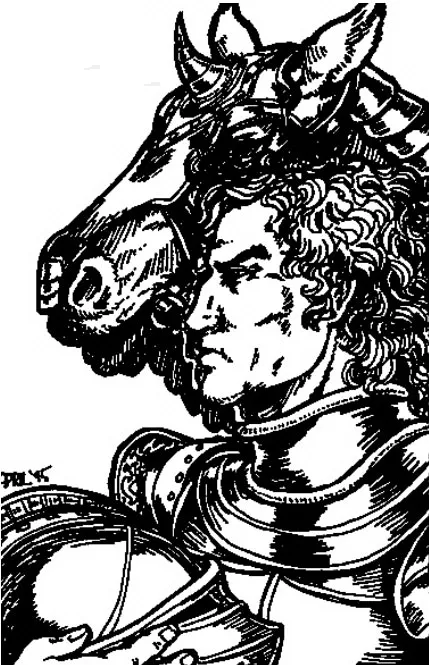
ABOVE: Lord Ironfist graces the cover of the manual for Heroes of Might & Magic I, and frames the narrative of the game through a series of letters. Illustration by April Lee.
上图:铁拳领主出现在《魔法门之英雄无敌1》手册的封面上,他通过一系列信件构建了游戏的叙事框架。插画由艾普莉尔·李绘制。
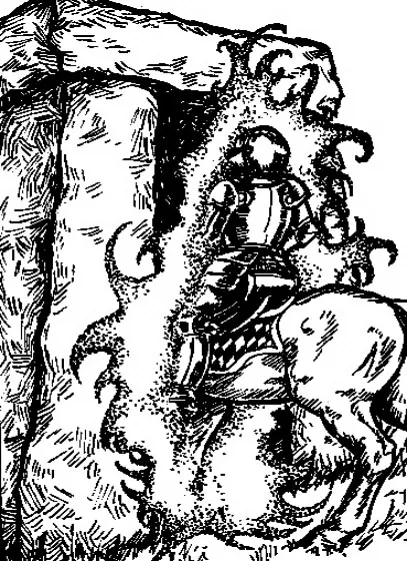
ABOVE: Lord Ironfist travels through the Varnal Hills portal on VARN-4 to discover the world of Enroth. Illustration by April Lee, taken from the manual for Heroes of Might & Magic I.
上图:铁拳领主穿越瓦纳尔山脉的传送门,从VARN-4来到了恩洛斯世界。插图来自艾普莉尔·李绘制的《魔法门之英雄无敌1》手册。
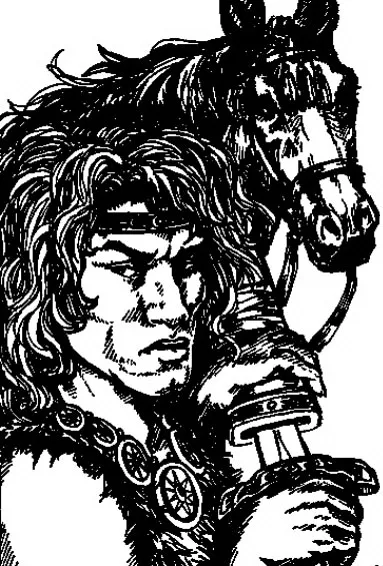
ABOVE: One of the first enemies that Lord Ironfist encounters during his conquest of Enroth is the brutal Lord Slayer, leader of the Barbarians. Illustration by April Lee, taken from the manual for Heroes of Might & Magic I.
上图:铁拳领主在征服恩洛斯的过程中所遭遇的第一个敌人,便是野蛮人首领、残暴的史莱尔领主。插图来自艾普莉尔·李绘制的《魔法门之英雄无敌1》手册。
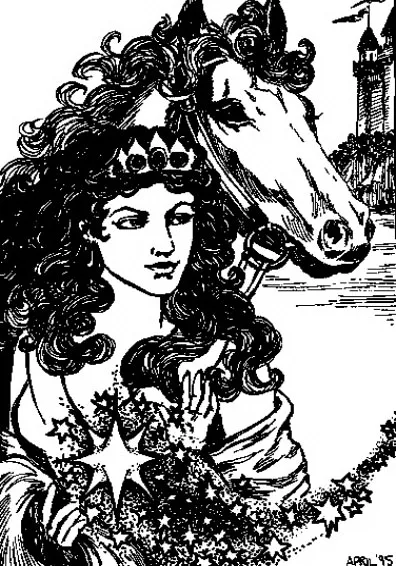
ABOVE: Queen Lamanda vigorously opposes Lord Ironfist's invasion with powerful magic and a host of forest creatures. Illustration by April Lee, taken from the manual for Heroes of Might & Magic I.
上图:拉曼达女王以强大的魔法和众多的森林生物,坚决抵抗铁拳领主的入侵。插图来自艾普莉尔·李绘制的《魔法门之英雄无敌1》手册。
Although there were many factors at play, it seemed that by a wide margin, new players were gravitating more toward RPGs than any other genres. Caneghem felt this was significant. It was almost as if there were a large arrow pointing toward the secret ingredient that the Bounty sequel required, and it was one with which he was already well acquainted. "RPGs fit with a wider variety of people's interests and talents and abilities. When I considered that I could bring more RPG elements into what I was working on, I thought they'd be an amazing combination. That was a big breakthrough, because I knew we could reach more players. And if you look at how things are now, you'll see that everyone else learned the same lessons I did. Almost every kind of game out there has some kind of RPG element to it now. Role-playing games do a good job of sucking you in and then keeping you invested."
尽管存在诸多因素的影响,但似乎新玩家明显更倾向于选择角色扮演游戏,而非其他任何类型的游戏,坎内根对此深有感触。仿佛有一支巨大的箭头指向了《国王的赏金》续作所需的某种神秘要素,而他对此早已了如指掌。“角色扮演游戏更符合各种不同人群的兴趣、才能和能力。当我想到我可以将更多角色扮演游戏的元素融入到我正在创作的作品中时,我认为它们会形成一种绝佳的组合。这是一个重大的突破,因为我知道我们能够吸引更多玩家。而且如果你看看现今的状况,你会发现其他人也学到了我之前学到的教训,如今市面上几乎所有的游戏都有某种角色扮演游戏的元素。角色扮演游戏能够很好地吸引你,并让你始终保持投入。”
Although he would be preserving most of the core gameplay concepts developed in King's Bounty, Caneghem knew that he would be walking away from the bounty-hunting metaphor of the original. He felt that it carried too much baggage with it and wanted a chance to push the reset button. By renaming it, he could borrow whatever elements he liked and ditch the rest without confusing or irritating players who were too invested in the way the previous game functioned. Still, he found inspiration for the new game's title on Bounty's character selection screen.
虽然坎内根仍将保留《国王的赏金》中大部分的核心游戏玩法元素,但他深知自己将要舍弃原作中那种猎取赏金的设定。他认为这个设定承载了太多的历史包袱,他希望能有机会“按下重启按钮”。通过给它换个名字,他便能够选取自己喜欢的任何元素,并舍弃其余部分,却不会让那些对前作游戏形式过于投入的玩家感到困惑或恼怒。不过,他是在《国王的赏金》的角色选择界面找到了新游戏名称的灵感的。
"You started your adventure by picking one of the four hero classes, so the name Heroes just made sense to me. It was the best place to start." His name choice was important because it signaled a new focus on the player's character and subtly telegraphed how he planned to integrate role-playing elements into the game. His first pitch regarding this new concept was to his internal marketing team at New World. "I met with the sales reps who went to Best Buy and GameStop and all the game stores, but they told me the buyers weren't going to give us much shelf space for some no-name strategy game called Heroes. Nobody had any idea what that was, and they weren't that interested. Maybe they'd take a couple of units. If we'd brought them a new Might & Magic game though, no problem. They'd take a ton of those." It didn't take Caneghem long to put two and two together and come up with a winning solution. "I just suggested we put the two names together and boom, the problem was solved: Heroes of Might & Magic. The salespeople thought it was a great way to break through."
“一开始要选择四种英雄职业中的一个,所以‘英雄’这个名称对我来说再合适不过了。这是个绝佳的起点。”他对这个名字的选择很重要,因为它表明了对玩家角色的新关注,并巧妙地透露了他计划如何将角色扮演元素融入到游戏中。对这个新概念的首次阐述是向 NWC 公司内部的营销团队进行的。“我与那些前往百思买、游戏站以及其他游戏商店的销售代表进行了会面,但他们告诉我,那些卖家不会给我们这款名为《英雄无敌》的无名策略游戏太多的货架空间。没人知道那是什么,他们也不太感兴趣。也许他们会拿几套,但如果我们给他们带来一款新的《魔法门》游戏,那就没问题了。他们会大量购买的。”做个加法并得出双赢的解决方案,对于坎内根来说并不需要多久,“我直接建议我们把两个标题放在一起,然后啪,问题解决了。:《魔法门之英雄无敌》。销售人员认为这是一个突破瓶颈的好办法。”
The salespeople weren't the only ones who were happy with the decision to mate both concepts together. The development team saw many opportunities, not the least of which was to allow the lore of Might & Magic to be explored in a new way. "They were all saying, 'We'll just name all the heroes after characters from the Might & Magic series, and borrow lore and story and fit it in somewhere.' It was much better than having to make everything up from scratch. We already had most everything we needed."
不仅仅是销售人员对将这两种概念结合起来的决定感到满意,开发团队也看到了诸多机遇,其中最重要的一点,就是能够以一种全新的方式探索《魔法门》系列中的故事情节。“他们都说:‘我们会把所有英雄的名字都取自《魔法门》系列中的角色,借鉴其背景故事和内容,并将其融入到游戏中。’这比从头开始创造一切要好得多,我们已经拥有了大部分所需的内容。”
Paul Rattner, who'd inherited the title of Might & Magic's lore master, was enthused with the development, but he also had his reservations. As with King's Bounty, Caneghem envisioned the new Heroes of Might & Magic game as a narrative-light experience. Despite its new emphasis on the player's character, storytelling would still not be a point of major focus for Heroes in the first game. "Jon's attitude toward game text used to drive me out of my mind. He'd say, 'Players don't read.' But obviously some people did, and I'd be writing and carefully constructing this story and saying, 'It's all gotta be there, right? I gotta have the clues there so people know what's going on and what to do.' And Jon's like, 'This is just text spew. You click on something and you're going to get some text.' So I had the inglorious job of writing all this so-called spew that he felt most players probably were glossing over."
保罗·拉特纳继承了《魔法门》系列“传闻大师”的头衔,他对这一开发项目充满热情,但也有所保留。与《国王的赏赐》一样,坎内根设想新的《魔法门之英雄无敌》将以叙事性较弱的形式呈现。尽管游戏在一定程度上突出了玩家角色的重要性,但在第一作中,故事叙述仍然不是游戏的主要关注点。“乔对游戏文本的态度曾经让我抓狂。他会说:‘玩家不阅读。’但显然有些人会阅读,而我会写作并精心构建这个故事,并说,这一切都必须在里边,对吧?我必须把线索放在那里,这样人们才能明白发生了什么以及该怎么做。而乔则说:‘这不过就是一些文字的堆砌罢了。你点击某个内容,就会看到一些文字。’所以,我承担了这项不光彩的任务,即撰写所有这些所谓的‘堆砌文字’,他觉得大多数玩家可能都忽略了这些内容。”
Apart from his desire to limit the amount of narrative intrusion into Heroes strategy, Caneghem still had strong feelings about the flavor of the content they were going to introduce, particularly in regard to its creatures. "With Might & Magic I'd had this rule about the lore that we could just make things up, whatever we wanted. It was pure fantasy. If we decided we wanted to shove in some monster that was a skull with bat wings tacked on, sure, it didn't matter. But with Heroes, I wanted players who weren't hardcore geeks to be able to come into the experience and have a level of familiarity with it without having to learn a bunch of new stuff. Everything had to come from existing world mythology that regular people already recognized. They'd understand what a Skeleton was, or what a Dragon was, but we wouldn't force them to figure out what a demon bat was or whatnot. I didn't want them to have to be a hardcore D&D geek to understand the world." (Later, this insistence that all of Heroes' creatures have a mythological basis would become a strong point of contention with the art director of Heroes IV, Joe McGuffin.)
除了希望减少叙事内容对《英雄无敌》策略玩法的干扰之外,坎内根对于他们即将引入的内容风格(尤其是其中的生物设定)仍有着强烈的看法。“在《魔法门》中,我给背景立的规矩就是我们可以随心创造,想怎么编就怎么编。那是纯粹的幻想,如果我们决定要加入一个长着蝙蝠翅膀的骷髅怪物,那当然没关系。但对于《英雄无敌》这款游戏,我希望那些并非游戏狂热分子的玩家也能参与体验,并且无需学习一大堆新内容,就能够对游戏有一定的熟悉。所有元素都必须来自大众已经熟知的现有世界神话体系。他们会明白骷髅是什么,或者龙是什么,而我们不会强迫他们去弄明白恶魔蝙蝠之类的概念。我不想让他们必须是《龙与地下城》的铁杆才能理解这个世界。”(后来,要求《英雄无敌》中的所有生物都具有神话基础这一规定,成为了《英雄无敌4》的艺术总监乔·麦格芬与我之间的一大争议点)
一位魔法英雄艺术家 - A Heroic and Magical Artist
Hired in 1990, Bonnie Long-Hemsath would be one of the longest-serving artists on staff at New World Computing, beginning with her work on Might & Magic III: Isles of Terra and ending finally with Heroes of Might & Magic IV. During her time there, she would handle a wide variety of characters, items, monsters, and UI elements. As the assistant to art director Julia Ulano, she would help shape the look of both Heroes of Might & Magic I and Heroes of Might & Magic II, adapting the concepts first established by King's Bounty artists Vincent de Quattro and Kenneth Mayfield.
妮·朗-亨萨特于 1990 年受雇于 NWC 公司,她是该公司长期在职的艺术家之一,从参与《魔法门3:幻岛历险记》的工作开始,直至最终以《魔法门之英雄无敌4》的工作结束。在此期间,她负责处理各种各样的角色、物品、怪物和用户界面元素。作为艺术总监朱莉娅·乌拉诺的助手,她协助塑造了《魔法门之英雄无敌1》和《魔法门之英雄无敌2》的外观,对《国王的赏赐》的美术文斯·德·夸特罗和肯尼斯·梅菲尔德最初确立的概念进行了调整。
Known by her coworkers as a much beloved, free-spirited hippie, she created many Heroes character portraits, with several representations of the Sorceress class notably bearing features that were remarkably similar to her own. This came as no surprise to anyone as she was a true believer in mystical powers. When a new wing of New World Computing's offices was opened in Woodland Hills, she memorably smudged the new suite with sage to purge it of possible evil influences before allowing the rest of the staff to enter their new working environment.
在同事们眼中,她是一位深受喜爱、充满自由精神的嬉皮士。她创作了许多《英雄无敌》的角色肖像,其中有不少“女巫”派系的画像特别具有与她本人相似的特征。这一点对于任何人来说都不足为奇,因为她坚信有神秘力量的存在。当 NWC 公司位于伍德兰希尔斯的新办公区启用时,她特意用鼠尾草在新办公室里涂抹了一圈,以清除可能存在的邪恶影响,然后才让其他员工进入他们的新工作环境。
Outside of work, Bonnie and her husband Greg were well-known for hosting a monthly potluck at their Topanga Canyon home, colloquially known as Hugger House. Shared with Dreamer's Guild developer David Joiner, the monthly events were home to an incredibly eclectic mix of writers, artists, musicians, and game designers, and included such famous visitors as science fiction luminaries Larry Niven, Jerry Pournelle, and Frank Kelly Freas.
在工作之外,邦妮和她的丈夫格雷格因每月在托帕纳峡谷的住所(通称“拥抱者之家”)举办一次聚餐活动而广为人知。同住的还有开发商“梦想家工会”(著名作品为游戏《无声狂啸》)的大卫·乔伊尔,月度活动汇聚了形形色色的作家、艺术家、音乐家和游戏设计师,其中包括一些著名的访客,如科幻小说大师拉里·尼文、杰里·普耐尔,还有插画师弗兰克·凯利·弗瑞斯。

Bonnie died on November 4 of 2020 of cervical cancer, but left behind an indelible mark on both the Heroes of Might & Magic series, and her many friends and New World Computing coworkers.
邦妮于 2020 年 11 月 4 日因宫颈癌去世,但她给《魔法门》和《英雄无敌》系列游戏、她的众多朋友以及 NWC 公司的同事们留下了难以磨灭的印记。
ABOVE: Bonnie Long-Hemsath, assistant art director on Heroes of Might & Magic I and Heroes of Might & Magic II.
上图:邦妮·朗-亨萨特,《魔法门之英雄无敌1》和《魔法门之英雄无敌2》的艺术总监助理。
The drive to present more commonplace creatures went beyond simple narrative concerns. By presenting familiar mythological creatures, players would have a generally instinctive sense of how different units stacked up against each other. "It wasn't rocket science to understand that in a one-on-one confrontation, a Dragon should beat a Peasant, right? Players instinctively grasped that. They still had to learn in the context of the game how many Peasants they needed to kill one Dragon, but it made sense that you'd need a thousand or so."
将更多熟悉的生物纳入游戏设定这一举措,并非仅仅出于叙事方面的考虑。通过呈现常见的神话生物,玩家能够自然而然地对不同单位之间的对抗情况有一个大致的判断。“要明白在一对一的对决中,龙应该会战胜农民,这并不是什么难事吧?玩家们会本能地明白这一点。他们还得在游戏的情境中去摸索出要消灭一条龙需要多少个农民,但感觉需要一千个左右会是合理的。”
Each hero would be granted a specific faction of troops that they could recruit from their starting town on each map, with some factions being decidedly more mythological in nature than others. The Sorceress would command troops pulled largely from Northern European influences, while the Warlock drew more heavily on monsters from the mythology of Greece. Barbarians would have the most D&D-like roster of fighters including goblins, orcs, ogres, and trolls. Only the Knight would command an all-human lineup based on traditional medieval battle units.
每个英雄都会获得一个特定派系的兵种组合,他们可以在每个地图的起始城镇中招募这些兵种。不同兵种的神话色彩程度各不相同,有些更为神话化,而有些则相对较为现实。女巫所指挥的部队主要来自北欧的影响,而男巫则更多地从希腊神话中选取怪物作为兵种。野蛮人拥有最接近《龙与地下城》风格的战士阵容,包括恶鬼(地精)、半兽人、食人魔和巨魔。只有骑士指挥的是以传统中世纪战斗单位为基础的全人类阵容。
"Grouping them into themes was kind of fun,” Caneghem said. "Sometimes it would be easy. If we had unicorns and elves, it was pretty easy to figure out that they belonged in the forest armies. In other cases, it would be rough, and we'd have to kind of squeeze a troop in somewhere to round out a roster where it might not make perfect sense in terms of theme, but they filled an important role that was missing."
“将它们归类为不同的主题还挺有趣的。”坎内根说,“有时候也很容易。比如,如果我们拿出独角兽和精灵,那么很容易就能确定它们属于森林军队。但在其他情况下,就会比较困难,我们可能得在某个地方挤出一支部队来凑齐一整支队伍,这样虽然在主题上可能不太完美,但它们却填补了缺失的重要角色。”
While the hero factions were being further rounded out with interesting units, a lot of technical work had been going on underneath the metaphorical hood to create a computer opponent that was more satisfying to play against. "For Heroes, I made up this term that I called Fun AI. I wanted something different than what other developers were using at the time, which were essentially just chess algorithms. They aren't any fun at all to play against. The problem with them was that as they got better, the harder it became for the player to play. They either kicked your ass or you figured out a way to beat them, and it just wasn't enjoyable. A good game AI needs to challenge you, but it should also make itself more fun to play against. They need to make the player feel great."
在英雄阵营的构筑逐渐完善、增添了一些有趣单位的同时,大量的技术工作也在隐喻性的外壳之下同步进行着。我们致力于打造一个更具挑战性且更令人满意的电脑对手。“对于《英雄无敌》这款游戏,我创造了一个术语,称为‘趣味人工智能’。我希望它与当时其他开发者所使用的算法有所不同。他们所使用的算法基本上只是类似于国际象棋的算法,与这些算法对抗根本毫无乐趣可言。它们的问题在于,随着它们变得越来越强大,玩家就越难以应对。要么你就被它们打得一败涂地,要么你就想出击败它们的妙招,但这样就不再有趣了。一款优秀的游戏 AI 需要挑战你,但同时也要让与之对抗的过程变得更有趣。它需要让玩家感觉很棒。”
The core challenge was to create a computer opponent that wasn't always rigidly logical and would sometimes even make choices that appeared to be in the player's favor. "I made it so that they're gonna go at you when they're not going to win, but they'll still chew up your army with attrition and go through your stacks of monsters. All of a sudden, the player is feeling like, Yeah, I kicked his butt! I killed that one! I killed another one! Bring it on, send another one at me! And the AI would almost be stroking your ego. It wouldn't be letting you win, but it would be doing things that normally a chess AI would never do."
核心挑战在于要设计出一个并非总是严格遵循逻辑的电脑对手,有时甚至会做出显然有利于玩家的选择。“我设定的规则是,当它们无法获胜、但仍可通过消耗战消耗你的军队时就会攻击你,并逐一消灭你的怪物群。突然间,玩家就会觉得:是啊,我打败了他!我杀了那队!我又杀死了另一队!来吧,再给我来一队!而这个 AI 几乎是在满足你的自尊心。它不会让你轻松获胜,但会做一些通常棋类 AI 绝不会做的事情。”
Caneghem had been working alone on his concept for Fun AI for quite a while, but New World's hiring of programmer Phil Steinmeyer following the publication of Iron Cross would prove instrumental in rounding out the concept. "We needed some extra programming work on Heroes, so we asked Philip if he would step in and help," Mark Caldwell recalled. "We'd liked what he'd done on Iron Cross." Caneghem indicates that he placed Steinmeyer in charge of the computer AI. "He was critical to making Fun AI functional, and we completely gelled on how that was gonna work."
坎内根独自进行着“趣味人工智能”这一概念的构思,这一过程持续了相当长一段时间。但在《铁十字》发行之后, NWC 公司聘请了程序员菲尔·斯坦梅耶,为完善这一概念起到了关键作用。“当时我们需要对《英雄无敌》进行一些额外的编程工作,所以我们询问菲尔是否愿意接手帮忙。”马克·考德威尔回忆道,“我们对他在《铁十字》中的表现很满意。”坎内根表示,他让斯坦梅耶负责电脑 AI 的工作。“他对于‘趣味人工智能’得以运行至关重要,而且我们完全达成了一致,明确了其运作方式。”
Another programmer who would have an important impact on Heroes' artificial intelligence wasn't even an employee of New World Computing. David Joiner was one of several members of the Dreamers Guild, a friendly rival company known for their Faery Tale Adventure role-playing series. Over the years, there was a great deal of unofficial backdoor creative collaboration that passed back and forth between the two companies, with Joiner and Caldwell frequently exchanging technical assistance. In 1994, New World even published Inherit the Earth under their own label, a game that had originally been developed at the Dreamer's Guild.
另一位对《英雄无敌》的人工智能设计产生重要影响的程序员,并非 NWC 公司的员工。大卫·乔伊尔是与 NWC 友好竞争的公司“梦想家工会”的一员,以《仙境传说》系列角色扮演游戏而闻名。多年来,两家公司之间存在着大量的非正式内部创意合作,也频繁进行技术上的互助。1994 年, NWC 公司甚至用自己的品牌发行了梦想家工会开发的《妙狐神探:地球继任者》这款游戏。
"I think David Joiner even wrote the algorithm that we used in Heroes for pathfinding," Caldwell said. "We were having trouble trying to draw a path, so if the player clicked, it would know how to make the calculation to get there and do it quickly. The problem was there was so much data, and we were trying to traverse it all. When I talked to David about it, he said he had this recursive algorithm that might help. He dropped it in, and boom! We had GPS! It was beautiful and it just worked instantly. When it came time for us to work on Heroes II, I remember thinking Where's that algorithm? Don't lose that, 'cause we're gonna want that."
“我记得大卫·乔伊纳甚至编写出了我们在《英雄无敌》中使用的寻路算法。”考德威尔说,“我们正好遇到了路径选择的难题,以在玩家点击某个位置时,就能迅速地计算并显示要如何到达那里。问题在于数据量太大,我们正试图逐一处理这些数据。当我向大卫提及此事时,他说他有一个递归算法或许能有所帮助。他将其加入进来之后,啪!我们就有了全球定位系统!它非常完美,而且能立即投入使用。当我们着手开发《英雄无敌2》时,我记得当时就在想:那个算法放在哪里?别把它弄没了,我们会需要它的。”
During New World Computing's push to become a third-party publisher, Bryan Farina joined the company's QA department as a tester. He recalled his excitement when the first build of Heroes I hit his desk. "So, we can get into a game. We can get on the Adventure Map. We can walk around. But if you touched anything, boom, you were instantly out to DOS. No warning, no exception, no assert, nothing. Just DOS. Like, This is not ready, which is even worse. It's like a tease, right? Because you want to get into this. But I don't remember when we actually started to get builds that actually worked, and the design of the game actually went through a lot."
在 NWC 公司努力转型成为第三方发行商的过程中,布莱恩·法里纳加入了公司的质保部门,担任测试员一职。他回忆起当《英雄无敌1》放到他桌上时自己的那份兴奋之情:“于是,我们就能进入游戏了。我们能进入冒险地图。我们能四处走动。但如果你碰到了任何东西,砰的一声,你就直接弹回了 DOS 系统。没有任何警告,没有任何例外,没有任何显示,什么都没有,只有 DOS 系统。就好像这还没有准备好,更糟的是,这更像是种撩拨,不是么?因为我们很想玩上这个游戏,但我不记得我们什么时候开始收到真正能正常运行的版本了,而且游戏的设计也经历了很多改动。”
As a tester, Farina's job was principally to make sure the game was functional, but the advice he would give about his experience while playing would lead to several important tweaks in the design. "I stumbled into a whole bunch of things that existed in the pre-release builds of Heroes that never reached the public. Like the cities didn't have ballista towers that would shoot at you. Your siege skill controlled how many times you could activate your catapult per turn, but it was an option for the player. If you just brought a bunch of range units and chose never to knock down the walls, you could just shoot everything in the towns and they would instantly lose. Towns were essentially death traps, like Don't be there. Jon would walk in and he'd watch me play and he'd ask me, "What are you doing?' And I'd tell him, ‘Oh, I'm just murdering everything in the town because it's super easy.' He's like, 'Oh, that's not good.'I was like, 'Yeah, I don't understand. They should have like ballistas or something that shoots back at you. Maybe there should be like a drawbridge so they can come out and kill me. Like, I don't know. They're just trapped in there, so I can kill them like no big deal.' So, all of a sudden, we got that stuff—the ballista towers and the drawbridges." Over time, Farina would develop a reputation as the only person in the company who knew the game as well as Caneghem and would often be brought in to try and beat maps that others considered unbeatable.
作为一名测试员,法里纳的主要工作是确保游戏能够正常运行,但他在游戏中所给出的关于自己体验的建议却促使游戏设计进行了几处重要的调整。“我偶然发现了一些在《英雄无敌》发布前版本中存在但没有公开的内容。比如城市里没有能够向你发射攻击的弩塔,而你的弹道术技能决定了你每回合能够使用投石机的次数。但这是给玩家的一个选项,如果你只是带了一群远程单位,并且不选择破坏城墙,那么你就可以随意射击城镇里的一切,并取得完胜。城镇基本上就是死亡陷阱,就像写着“别待在那里”那样。乔走了进来,观看我的游戏过程,并问我:‘你在做什么?’我会告诉他:‘我只是在屠杀城镇里的所有生物,因为这太简单了。’他则说:‘哦,这不太好。’我说:‘是的,我不明白。他们应该有像弩塔这样的东西,能够对你进行反击。或许也应该有像吊桥这样的东西,这样他们就能出来攻击我。就好像,我不知道啊,好像他们只是被困在那里,所以我杀他们就跟没事一样。’于是,突然之间,我们有了那些东西——弩塔和吊桥。”随着时间的推移,法里纳逐渐在公司里树立起了这样的名声:他是公司里唯一一个像坎内根那样精通这款游戏的人,并且经常被请来尝试破解那些其他人认为无法攻克的地图。
The iterative changes to the game design took many months to pull together, but even up to the eleventh hour, the team was furiously working to get everything just right. Farina and the rest of the testers in QA were valiantly banging away and looking for any showstopping bugs, but Caneghem could tell that something still was critically wrong with the game. The testers were only playing it because they had to, not because they enjoyed it, something that had never happened at New World before. That's when he realized he needed to do some last-minute adjustments in the hopes of solving that critical problem. "The QA department was coming to me and saying, 'You just do this and you win. It's boring.'The pacing felt off and it just wasn't flowing. I had a sense that the root problem had something to do with the time between turns, how far you moved, or something like that. I didn't know for sure, so I just delved in. I started tweaking and tweaking and tweaking it, and finally I started seeing some changes in the testing department. Now they were all playing it over and over again, and they were arguing how this strategy was superior to that strategy, and I knew at that point it was ready to go, and I'm like, Ship it! It was such a huge difference in only a couple of weeks."
对游戏设计的反复修改历经了好多个月才最终完成,即便到了最后一刻,开发团队仍在拼命努力,力求将一切做到完美。法里纳以及质保部门的其他测试人员都在奋力工作,寻找任何可能阻碍游戏正常运行的漏洞,但坎内根能明显感觉到这款游戏仍存在严重的缺陷。测试人员只是被迫在玩这款游戏,而非出于喜爱,而这种情况之前在 NWC 从未出现过。就在那时,他意识到自己需要做一些最后的调整,希望能解决这个关键问题。“质保部门来找我,说:‘你只要这么重复下去就能获胜。这太无聊了。’游戏的节奏感觉不对,毫无连贯性。我有一种感觉,根本问题可能与回合之间的间隔、移动的距离之类的东西有关。我不太确定,所以我就深入研究了。我不断地调整、调整、再调整,最终在测试部门看到了一些变化。现在他们一遍又一遍地玩这款游戏,还在争论哪种策略比哪种策略更好,那时我就知道它已经可以发布了,我心想,发货吧!仅仅在两周内,就有了如此巨大的改进。”
Once Heroes of Might & Magic I was completed, the task fell to director of marketing Scott McDaniel to get the word out. Although having the Might & Magic brand on the outside of the box was a big help in certain ways, he still had a big job in communicating what the new game was all about. "We needed to differentiate it from Might & Magic. The RPG was an eight-hundred-pound gorilla. Players already knew that name and associated it with role-playing, so now we needed people to connect it to a turn-based strategy game. It took a lot of press, and educating the magazines about what this new thing was. We needed an actual gamer who would sit down and play it and give their thoughts about it, but we never bought editorials from anybody, not once. There were some companies back in the day that did that sort of thing, but we never did. It was more valuable to have a genuine response from someone who would tell everyone, ‘Oh, this game is really fun."
在《魔法门之英雄无敌1》完成后,市场营销总监斯科特·麦克丹尼尔便肩负起宣传推广的任务。尽管在游戏包装盒的外侧印上《魔法门》的品牌标识在某些方面确实起到了很大作用,但他仍有一项艰巨的任务,那就是向玩家清晰传达这款游戏的内涵。“我们需要让它与《魔法门》区分开来。这款角色扮演游戏就像一只八百磅重的大猩猩。玩家们早已熟知这个名称,并将其与角色扮演游戏联系在一起,所以我们现在需要让人们将其与回合制策略游戏联系起来。这需要大量的宣传工作,还要向杂志们解释这款游戏的新特点。我们需要一位真正的玩家坐下来亲自体验一下这款游戏,并且发表对此的看法,但我们从未从任何一方购买过社论,一次都没有。过去确实有一些公司有过这样的行为,但我们从未这样做过。获得真实的反馈要更有价值,因为这就等于告诉所有人:‘哦,这款游戏真的很有趣。’”
Thankfully for McDaniel, the magazines were more than ready to throw their support behind the hybridized game. The November 1995 issue of Computer Games Strategy Plus was one of the first major publications to review it, with writer Steve Bauman calling it "a true hybrid of strategy and role-playing game that works equally well as either. It's a beautiful game, graphically and aurally, and is so easy to play that any gamer should be able to navigate the entire game in a matter of minutes." PC Gamer would award it with both its prestigious Editor's Choice and Golden Triad awards, while Computer Gaming World would give it a glowing review, awarding it five out of five possible stars.
多亏麦克丹尼尔的努力,那些杂志非常乐意全力支持这款混合游戏。1995 年 11 月的《计算机游戏策略增强版》是最早对这款游戏进行评测的主要出版物之一,作者史蒂夫·鲍曼称其为“一种真正融合了策略和角色扮演游戏元素的游戏,两种类型的互补都同样出色。它在图形和音效方面都很美妙,而且操作非常简单,任何玩家都应该能在几分钟内把握整个游戏的玩法。”《电脑玩家》给它颁发了其著名的“编辑选择奖”和“金三角奖”,而《计算机游戏世界》则给予了它一份极高的评价,给了它满分五颗星。
Caneghem's read on the shifting nature of the gaming audience and his gamble to mix the two genres together was paying off, and not just in critical acclaim. A press statement from New World Computing released in the same month announced that Heroes of Might & Magic had already shipped 100,000 units since hitting stores in late September. By October of 1997, sales of the game would surpass 500,000 copies. The game had been an unquestionable hit, forever erasing the sting of King's Bounty's poor showing. With another face and with another name, the core concept was proven solid. It was well on its way to even more stratospheric heights. Heroes had risen to the challenge.
坎内根对游戏受众变化趋势的准确判断、以及他将两种游戏类型融合在一起的策略最终取得了成效,不仅赢得了广泛的好评,还取得了销量上的巨大成功。在同一个月, NWC 公司发布的一份新闻公报称,《魔法门之英雄无敌》自 9 月下旬上市以来,已售出了 10 万套。到 1997 年 10 月,它的销量超过了 50 万套。这款游戏无疑大获成功,彻底消除了《国王的赏金》表现不佳所带来的负面影响。在换了一副面孔、取了一个新名字之后,其核心理念依然稳固可靠。《英雄无敌》成功地应对了挑战,它正朝着更高的巅峰迈进。
结束你的回合! - End Your Turn!
In 2022, over two decades after the release of Heroes of Might & Magic III, almost a thousand players from all over the world battled through hundreds of matches in competition for the title of the first-ever Heroes of Might & Magic III World Champion. This was astonishing, not only given the longevity of the franchise, but also because prior to the Heroes franchise's acquisition by Ubisoft the game was principally designed as a single-player game, and the idea of it being played as a multiplayer e-sport was the furthest thing from creator Jon Van Caneghem's mind during the early years of its development.
2022 年,在《魔法门之英雄无敌3》发布近 20 年后,来自世界各地的近一千名玩家参与了数百场比赛,争夺首个《魔法门之英雄无敌3》世界冠军的称号。这一成就令人震惊,不仅因为该系列游戏的持久影响力,还因为在《英雄无敌》系列被育碧收购之前,这款游戏主要是作为单人游戏设计的,而且在开发初期,创始人乔·万·坎内根根本没有想到将其作为多人电子竞技项目来玩。
"There wasn't much multiplayer technology that we could use in the beginning," Caneghem said. "And everybody certainly didn't have an internet connection, so it really wasn't on my radar at first. When people first got hooked up, I was fascinated with the possibility, but the thing I came across immediately was that turn-based, multiplayer games against other humans aren't very fun, and they're difficult to play."
“一开始我们可用的多人游戏技术并不多。”坎内根说,“而且当时大多数人都没有网络连接,所以一开始我并没有把这个看作是重要事项。当人们开始接入网络后,我对这种可能性感到很着迷,但马上我就发现,与人类对手进行回合制多人游戏并不好玩,而且玩起来也很困难。”
Caneghem's experience with publishing another turn-based strategy game in the early '90s informed a lot of his decisions regarding how much importance he chose to place on multiplayer in Heroes. "We published a game called Spaceward Ho! When we were testing it in the office, I remember Mark Caldwell yelling down the hallway, "E.Y.T.! End your turn!' Because we're all waiting for someone to put their order in, you know. It became an ongoing joke. We loved it because it was like playing a board game, but you didn't have to have all the stuff and sit in the room. And you had the computer doing all the boring stuff for you. We could tell it was going to be the future, but the turn-based premise created a lot of issues, and everybody moves at a different speed. And when you watch people play Heroes everybody plays differently. Some people click, click, click, click. Other people will sit and look at every little menu and try to decide if they're going to go here or there. So it's a very personal concept."
坎内根在 90 年代初曾负责过另一款回合制策略游戏的发行工作,这段经历对他将《英雄无敌》的多人游戏放在怎样的位置产生了深远影响。“我们曾推出了一款名为《太空征服》的游戏。在办公室进行测试时,我记得马克·考德威尔在走廊里大声喊道:‘结束!结束你的回合!’因为我们都在等着有人下订单,你知道的。这件事成了一个持续的笑话。我们很喜欢这款游戏,因为它就像玩一种棋盘游戏,但你不需要拥有所有的配件,也不需要都坐在房间里,而且电脑会为你处理所有繁琐的计算。我们能预见到它会成为未来的游戏模式,但回合制的设定却带来了很多问题,而且每个人的行动速度都不一样。当你观看人们玩《英雄无敌》这款游戏时,会发现每个人的表现都各不相同。有些人会不停地点击,不停地点击;而其他人则会坐着,查看每一个小菜单,试图决定自己是要往这边走还是那边走。所以这是一个非常个人化的概念。”
"I don't know if there're too many good turn-based multiplayer games, and even the ones that go real big, like the Scrabble ones, are asynchronous," said Caneghem. "Heroes was just solidly turn-based, and everything that made it addictive to me was the turn-based game where you have the time to think and then use strategy to decide what you wanted to do."
“我不知道是否有很多优秀的回合制多人游戏,但即便是那些相当热门的游戏,比如《拼字游戏》之类,也是非同步的。”坎内根继续说道,“《英雄无敌》就是纯粹的回合制游戏,而让我上瘾的全部原因就在于这种回合制玩法,即你有足够的时间思考,然后运用策略来决定自己要做什么。”

ABOVE: Sheltem, the Guardian of Terra as he appears during the opening cinematic of Might and Magic III. "Walk carefully then through this third challenge, and take heed your final decision is truly what you desire—for the course of destiny cannot be turned once set in motion ..." he grimly warns players as they set out on their adventure.
上图:谢尔坦作为幻岛守护者在《魔法门3》开场动画中的形象。“谨慎地走过这第三场挑战吧,然后做出你最终真正想要的决定,因为命运的进程一旦开始便无法逆转......”当玩家踏上冒险之旅时,他严酷地警告道。